An Afternoon on Zandvoort Beach with Plastic Whale
May 19, 2026Most of what I write here is about test automation, QA processes, and the day-to-day of enterprise software delivery. This one is different. On May 19, our team at Rabobank spent an afternoon — 14:00 to 16:00 — on a community beach cleanup at Zandvoort, and it left enough of an impression that I wanted to put it into words.
The credit for this one goes to a colleague of mine, who reached out to Plastic Whale and organized the whole thing for our team. Plastic Whale is a Dutch organization that runs cleanup events along canals and coastlines, turning the plastic collected into materials for boats and other products. I'd heard about their work before, but this was the first time I actually joined one in person rather than just admiring the idea from a distance. If you want to see what they do, it's worth a look at plasticwhale.com.
How the afternoon was set up
The whole thing was organized properly, not just "grab a bag and go." We started with a short introduction about Plastic Whale and what the cleanup would involve, followed by snacks and a knowledge quiz about plastic pollution and the local coastline — a nice, low-key way to get everyone settled before heading out onto the sand.
Grey skies, open beach
The weather wasn't dramatic, just the flat, overcast grey that the Dutch coast does so well — wide open sky, a long stretch of empty sand, the sea a quiet grey-blue in the distance. Partway through, it actually started raining, and the sky stayed cloudy for most of the rest of the afternoon. Nobody seemed to mind much — we just kept going. There's something about being out on an open beach with a job to do that makes a bit of rain feel beside the point.
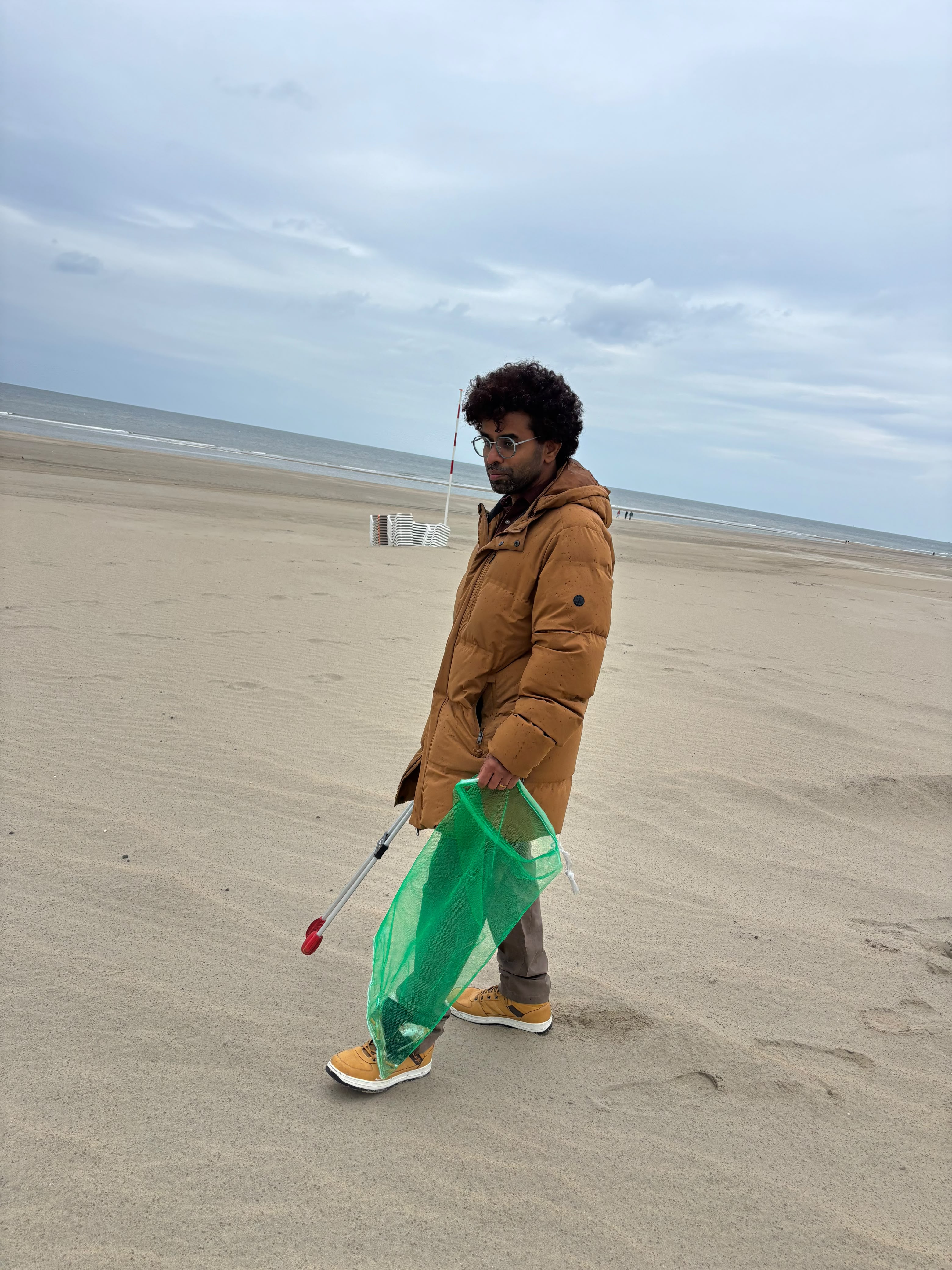
Each of us was given a simple grabber tool and a mesh bag, and the instructions were straightforward: walk, look, pick up anything that doesn't belong. We had about an hour and a half on the beach, which sounds short until you're in it. It sounds almost too simple to matter. But spend that time actually doing it alongside your colleagues, scanning the sand instead of just walking over it, and you start noticing how much is genuinely there — bottle caps, cigarette butts, fragments of rope and netting, tiny pieces of broken plastic that have clearly been tumbling in the surf for years, slowly breaking down into smaller and smaller pieces.
The part that stuck with me
What struck me most wasn't the volume of waste — though there was plenty — it was how invisible most of it is at a normal walking pace. You can stroll along this exact beach on any given day and see "clean" sand. It's only when you slow down and actually look, the way you do when you're heads-down with a litter picker, that the picture changes completely.
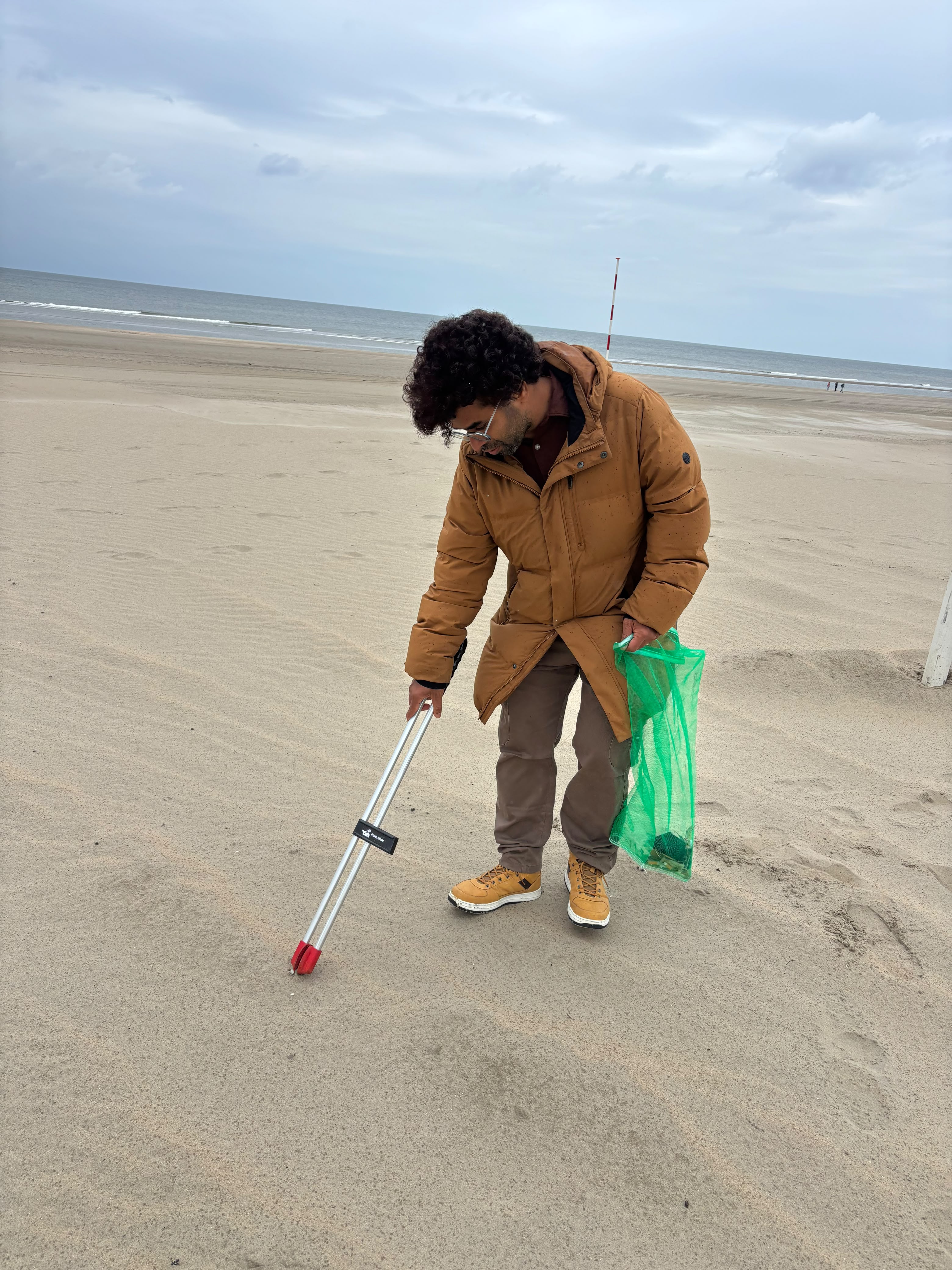
There's an obvious parallel to the work I do professionally, even if it feels like a stretch to draw it out loud: most problems — in code, in a beach, in a process — are invisible at normal speed. You only find the real issues when you deliberately slow down and look closely instead of skimming past. I didn't go into that afternoon thinking about test coverage, but by the end I couldn't help noticing the similarity.
Weighing in, and a group photo
Once the hour and a half was up, everyone's bags got weighed, bottle caps and all. There was a small award ceremony for whoever had collected the heaviest haul — a fun, slightly competitive note to end on, even though I think everyone secretly knew the real point was just being out there. We finished with a group photo on the beach, soggy jackets and all.
Why this kind of thing matters to me
I don't think one cleanup changes very much on its own, and I'm not under any illusion that picking up a bag of bottle caps solves a global plastic problem. But there's something valuable in doing it anyway — in showing up, in person, for something that has nothing to do with deadlines, sprints, or client deliverables. It's a different kind of attention than the one I bring to my day job, and I came away from it feeling more grounded than I expected to.
Afterwards, the plan was drinks and some bites at a beach bar nearby, which turned out to be just as nice as the cleanup itself. It's easy to know your colleagues mainly through stand-ups and sprint reviews — there's something different about sitting down together, still a bit damp from the rain, after a few hours of doing something hands-on together.
You don't need a perfect solution to a big problem before doing something small and concrete about it.
If you're in the Netherlands and looking for a low-key, genuinely worthwhile way to spend an afternoon, I'd recommend looking up a Plastic Whale event near you. You don't need any special skill or equipment — just a willingness to slow down, look closely, and pick things up. That turned out to be more than enough.
I'm always happy to connect with fellow QA professionals, discuss testing challenges, or share knowledge.
Get in touch